The Production Process of Brown Fused Alumina: From Bauxite to Abrasive Grain
A detailed introduction to how brown fused alumina is produced—from high-quality bauxite to finished abrasive grains—covering calcination, smelting, crushing, shaping, and grading.
XINLI ABRASIVE
11/10/20252 min read
1. Introduction
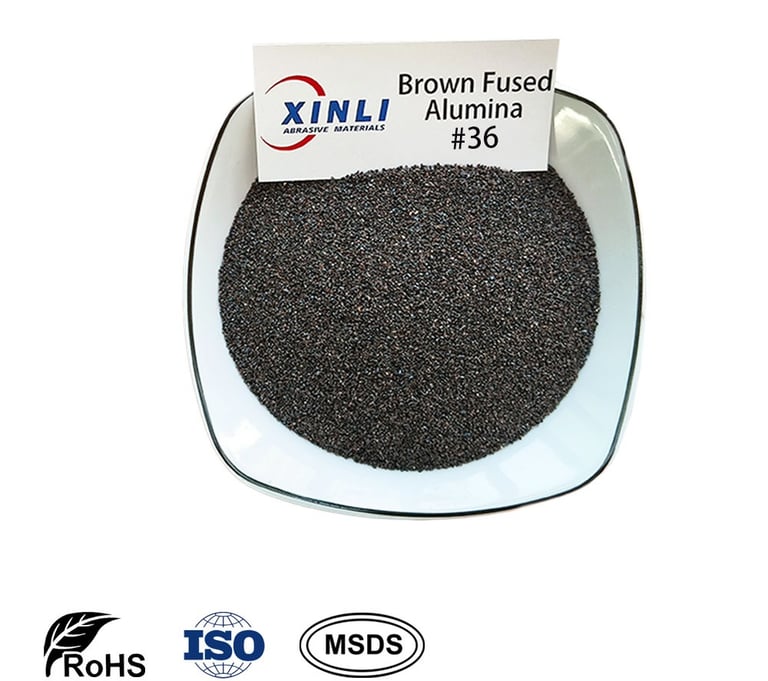
Brown Fused Alumina (BFA) is one of the most widely used industrial abrasives, known for its high hardness, toughness, and cost-effectiveness. Understanding how BFA is produced helps buyers evaluate product quality and select suitable materials for applications such as grinding wheels, sandblasting, refractory linings, and polishing.
This article walks through the entire production process—from raw bauxite ore to finished abrasive grains.
2. Raw Material Selection: High-Quality Bauxite
The production of BFA starts with high-aluminum bauxite, typically containing:
Al₂O₃: 85–90%
Fe₂O₃: 2–4%
TiO₂: 3–4%
Impurity levels directly affect color, hardness, toughness, and refractory stability. High-grade bauxite ensures a more consistent melt and better abrasive performance.
3. Calcination of Bauxite
Before smelting, the bauxite is calcined at 1200–1600°C to:
Remove moisture and volatile compounds
Decompose hydrates
Increase density
Improve electrical conductivity for smelting
Calcined bauxite produces a more stable melt and reduces energy consumption during furnace operations.
4. Smelting in the Electric Arc Furnace
The core process of BFA production is smelting in a tilting electric arc furnace at temperatures up to 2000–2200°C.
Key steps:
Bauxite, coke, and iron filings are mixed as raw materials
High temperature melts the alumina-rich mixture
Reduction reactions remove oxygen and form corundum crystals
Cooling forms solid brown fused alumina blocks
Why Fe and Ti Matter
Trace Fe₂O₃ and TiO₂ give BFA its characteristic brown color and increase toughness.
Compared with white fused alumina, BFA has:
Lower purity
Higher toughness
Better impact resistance
Lower production cost
5. Cooling and Solidification
After smelting, the molten material is cooled:
Slow cooling → produces more regular and larger crystal structures
Rapid cooling → increases brittleness but improves grindability
The cooling method depends on the final application.
6. Crushing and Shaping
The solid blocks are crushed using:
Jaw crushers
Roller crushers
Ball mills
Then the grains are shaped:
Blocky grains → for bonded abrasives (grinding wheels)
Angular grains → for blasting
Sharp grains → for coated abrasives (sandpaper)
Control of particle shape greatly affects grinding efficiency and durability.
7. Magnetic Separation
Because iron filings are used in smelting, the crushed grains undergo magnetic separation to remove:
Residual Fe
Magnetic impurities
Contaminants from crushing equipment
High-purity grains have higher performance and less contamination during polishing or blasting.
8. Sieving and Particle Size Grading
Finally, the grains are graded according to international standards:
F standards (FEPA)
P standards (coated abrasives)
JIS for micro powder
Sieving, airflow classifiers, or hydraulic classifiers are used to achieve precise particle size distribution.
Consistent grading is crucial for stable abrasive performance.
9. Final Product: Brown Fused Alumina Abrasive Grain
The finished BFA grains are:
Hard (Mohs 9)
Tough and impact-resistant
Suitable for grinding, polishing, blasting, and refractory applications
Typical applications include:
Grinding wheels
Sandpaper
Sandblasting media
Refractory castables
Anti-skid flooring
10. Conclusion
From carefully selected bauxite to advanced smelting and precise grading, the production of brown fused alumina is a complex, controlled process. Each step determines the final abrasive’s performance, making process stability a key factor in choosing a reliable supplier.